|
March 23 - World Meteorological Day
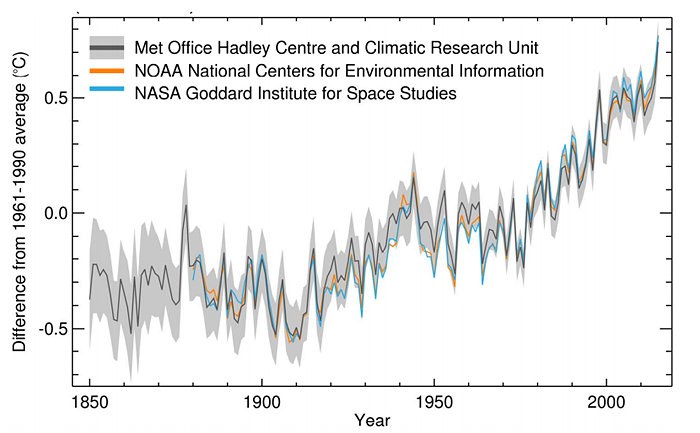
World Meteorological Day is celebrated every year, to mark the entry into force of the Convention of the World Meteorological Organization (WMO) of March 23, 1950 as well as of the significant contribution made by national meteorological services in the security and welfare of society. The Republic of Moldova is a member of WMO since 1994 and actively participate in its activities. Currently, WMO comprises 191 countries. The World Meteorological Organization is the authoritative source for information within the UN system on issues related to weather and climate. The theme of this year for World Meteorological Day, proposed by WMO, is dedicated to climate change – ”Hotter, drier, wetter. Face the future”. This topic has been chosen to show the reality of global warming. The surface temperature of the earth and oceans is increasing, there is increased intensity of extreme weather events - such as heat waves, drought and torrential rains. According to WMO data last year it was the hottest year recorded since the beginning of the observation period for weather and climate. The global temperature in 2015 was 1 ° C higher compared to temperature before instrumental era. In the Republic of Moldova 2015 was also characterized by a high thermal regime. The average annual temperature in 2015, on average across the country, was only 0.1 ° C lower than the record registered in 2007. Isolated (MS Briceni, Soroca, Camenca, Corneşti) average annual air temperature has exceeded with 0.1-0.4 ° C the highest values since the entire period of observations (in 2007). In the rest of its territory peaked history (MS Fălești, Chișinău, Leova) or took 2nd place (after 2007) in the list of highest average annual temperatures. According to independent data of NASA and of the National Oceanic and Atmospheric Administration, global warming has steadily gained momentum in the last 35 years and the period between 2001 to 2015 was the warmest for the entire period of observation (Fig.1).
Fig.1. Global average temperature anomaly (1850 – 2015)
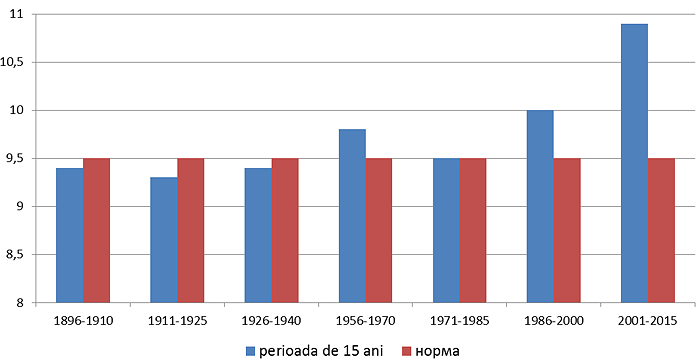
It should be noted that the last 15 years in Moldova were also the warmest in the entire period of observation (Fig.2). According to the long period of observation of meteorological station Chisinau during this period 13 of the 15 warmest years rests with the period between 2001 and 2015. Years 2007 and 2015 proved to be the warmest since the beginning of the observation period. The average annual air temperature of these years for the first time was + 12.0 ° C which is 2.5 ° C higher than the norm.
Fig.2 The average air temperature for different periods of 15 years. Chisinau
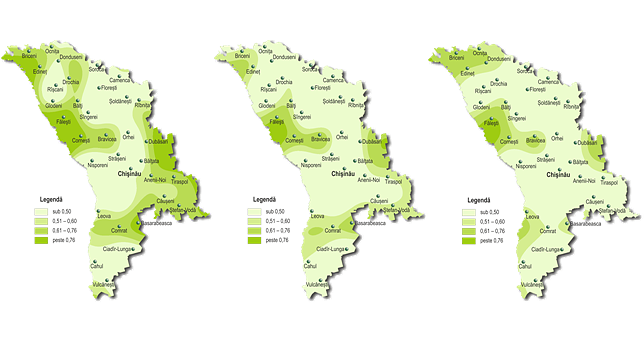
In the period 2000-2015 the air temperature in the country for the first time reached the very dangerous values - + 40 ° C and more (2000, 2002, 2007, 2012). The highest number of days with dangerous temperatures was recorded in 2007 – 5 days, under these conditions coverage in the country was one of the greatest (7 points). In 2012 was the highest recorded air temperature throughout the observation period – +42°C (August 7, MS Fălești). Due to high thermal regime and deficit rainfall, drought during the growing season in 15 years was observed 2-3 times more often, compared to the entire period of observation. Under these conditions in recent years compared with the mid-twentieth century it was also observed the number of days with dangerous heavy rain showers – 2 and 3 days, respectively, resulting in adverse consequences. Abnormally warm weather and significant rainfall deficit, which were observed on the territory of the Republic of Moldova for the most part of June 2015 and its maintenance throughout July and August, contributed to the soil and atmospheric drought. Rainfall during the summer on 60% of the territory was essentially 80-160 mm (40-70% of the time). In the northern and central districts of the country, isolated have fallen only 50-70 mm (20-30% of the norm), which in these areas is reported for the first time in the entire period of observation or on average once in 25-30 years. Only at MS Fălești, Comrat and MAP Basarabeasca rainfall was close to the norm and constituted 145-150 mm. The cumulative action of the high temperatures and low rainfall with negative effects on agricultural crop yields, ranks 2015 with the third place, after dry years 2007 and 2012. General hydrothermal coefficient during the period of agricultural crops vegetation (May-August) on a large part of the national territory has averaged 0.5, which corresponds to the severe drought (Fig.3).
Fig.3. Evaluation of drought in Moldova during the 2015 growing season (May-June, from May to July, from May to August)
Due to dry weather, reported in much of the summer period, it had negative influence on yield formation of maize, sunflower, sugar beet, also development and growth of vegetables and other crops. Thus, data from meteorological observations made in Moldova confirms the conclusions of scientists on global warming. As the researchers say one of the causes of climate change on Earth is the human factor. This issue was dedicated to the UN Conference on Climate Change held in December 2015 in Paris, where they reached an agreement between countries to reduce emissions of greenhouse gas. The World Meteorological Organization appeals to member countries of the Forum for the climate in Paris from December for early fulfillment of its obligations to reduce human impact on climate change.
|